Reduce, Reuse

An  article about the challenges of managing recyclables appeared in our local newspaper recently. It made me start rethinking the virtues of the whole recycling idea. The article pointed out that more recyclables on the market means declining prices, and it becomes less cost effective for someone to come around to our small towns and haul the stuff away.

It made me aware of some things I hadn’t considered before, mainly that it takes money and fuel to haul recyclables away and to recycle them into new materials. It’s still better than throwing it all in the landfill, but we need to do even better still. We need to focus more on the reduce and reuse sides of that triangle symbol.

I have been proud of the fact that in our household of two, it takes us at least a month and often longer to fill up a kitchen trash basket with stuff for the landfill because we recycle everything we can.  But the bins of stuff we send to the recycling center now seems too much. So my current project is to look at what we recycle and how we can change it into reduce or reuse.

This is what we already do:

  • Take reusable cloth shopping bags to the grocery store. Change: try to remember to use them for other types of shopping as well.
  • Reuse those plastic produce bags. After use, we wash them out, and we keep a bag of them in the car with the cloth shopping bags.
  • Buy from the bulk foods section. We buy a lot of groceries this way, but I think we could do more. This is where reusing those plastic produce bags comes in handy. Even better: bring plastic and glass storage containers from home. We do this some, could do it more.
  • Make yogurt at home. We consume a lot of yogurt and at one point had an enormous collection of empty plastic yogurt containers. I started making it at home as a moneysaving measure, since homemade costs a quarter of the price of the locally-made, additive free brand that we like. I make it with local milk that comes in returnable glass bottles.
  • Shop at thrift stores. This is where I get most of my clothes, and occasionally other useful things as well.

The next step is to pay attention to exactly what goes into our recycling bin. I know one thing is the boxes and packaging from online shopping. Theoretically, it all could be reused, if only mailing packages were a frequent activity of ours.

This is what I’ve come up with so far. Please share any suggestions and things that have worked for you.
Posted in nonedibles | Tagged | Leave a comment

Cabbage and Roots Soup

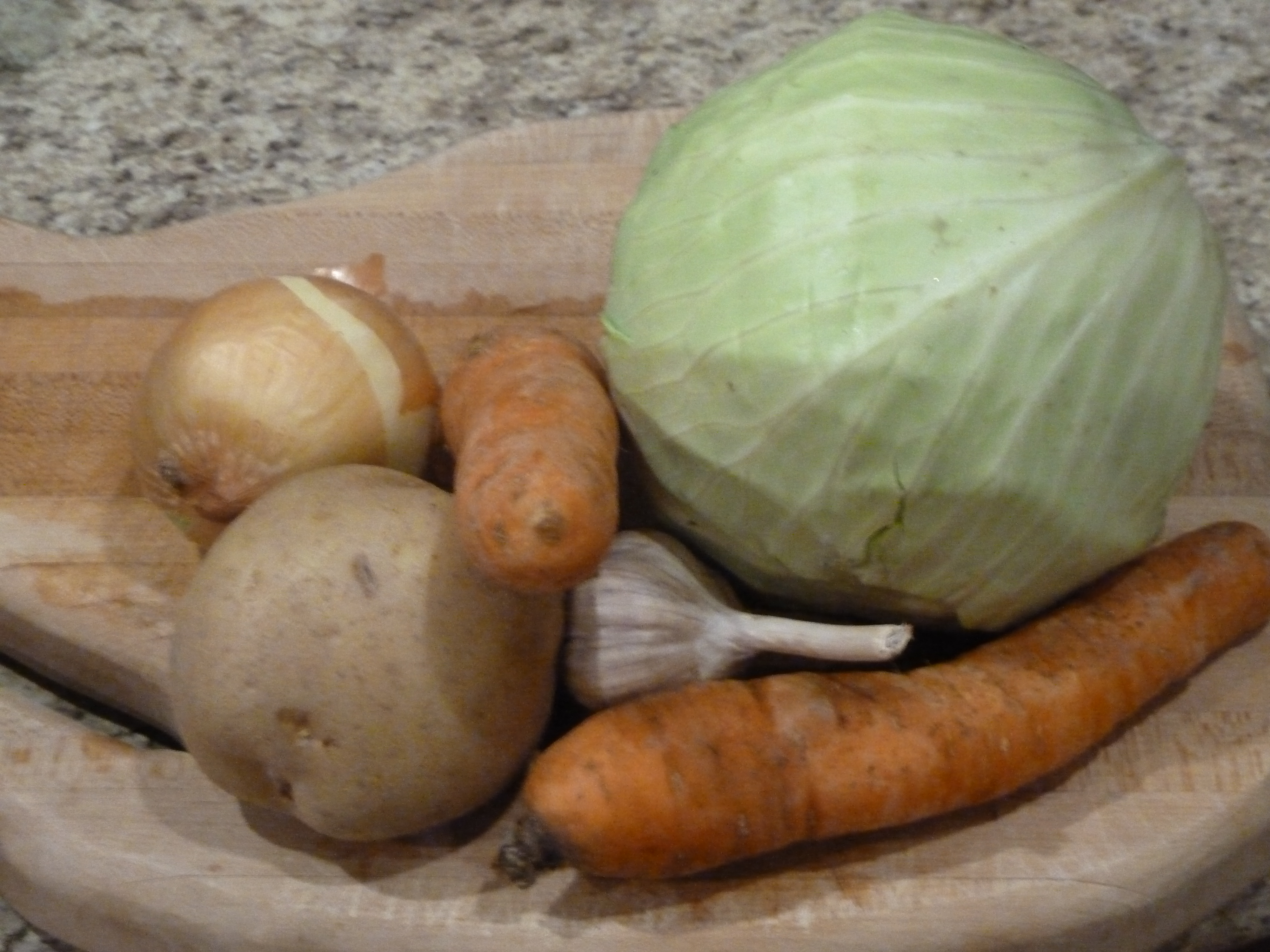
There is a farm just down the road from where I used to live that has a winter CSA. They provide a weekly basket of winter storage vegetables — cabbage, carrots, turnips, beets, celeriac, potatoes, yams, onions, garlic — making year-round local eating easy even in this cold and snowy land. Unfortunately, I now live too far away to make a weekly pick up convenient, but last week I was in the area for other reasons, so I dropped by the farm stand and loaded up my shopping bags. Then I came home and turned some of my loot into one of my favorite winter standbys – cabbage and roots soup.

P1010920

It’s a simple concept. Just throw some cabbage into a large pot with whatever root vegetables you have on hand, add a large can of tomatoes, broth, and water, and cook until done. Or, follow this recipe:

Cabbage and Roots Soup

1 T olive oil

I medium onion, chopped

2 cloves garlic, minced

4 cups vegetable broth

1 large (28 0z) can tomatoes

1 small cabbage (or ½ large), sliced

2 medium potatoes, scrubbed and cubed

2 cups root vegetables, peeled as needed and sliced or cubed

1 T fennel seed or caraway seed

salt to taste

4 cups or more of water

Heat the oil in the bottom of a large pot. Sauté the garlic and onions until the onions are transparent, about 5 minutes. Add the broth, the rest of the vegetables, and seeds. Bring to a boil, then let simmer for 30 minutes. Add more water as necessary while cooking. Serves 6-8.

P1010921

Good vegetables to use (any combination): carrots, parsnips, turnips, rutabaga, celeriac

Variation: Substitute a small or medium yam for one or both of the potatoes.

Use the vegetable peels and the core of the cabbage to make vegetable broth. Throw them all in a pot, cover with a quart of water and simmer for about 30 minutes (or longer if you wish, though you may have to add more water). Freeze it, then you will have homemade vegetable broth ready for your next batch of soup.

Posted in food from the garden, recipes | Tagged , , , , | 1 Comment

A Basic Quiche Recipe

Quiche is fairly easy to make and is a good way to cook with local ingredients. Here’s the basic recipe that I use:

  • 4 eggs
  • 1  1/2 cups milk
  • 1/2 to 1 cup grated cheese
  • salt and herbs to taste
  • vegetables of your choice
  • one pie crust

P1010900

Cover the bottom of the pie crust with the cheese, then add the prepared vegetables. Beat together the eggs, milk, salt, and herbs and pour over the cheese and vegetables. Bake at 375 for 45-50 minutes until the filling is set.

Quiche is traditionally made with cream, but I always use nonfat milk and it still comes out delicious.

You can make your quiche with whatever vegetables you like. I usually start by sautéing a couple of garlic cloves and a chopped onion. Then I add one of the following combinations:

– steamed spinach and a pinch of nutmeg

– sautéed mushrooms and thyme

– steamed swiss chard leaves and thyme

– sliced raw tomatoes, oregano, and basil

Though as far as tomatoes go, I have so many other uses for them that it’s not often that they make it in to a quiche.

P1010897

Here’s the local analysis of the spinach quiche I made the other day:

Local

eggs, milk, cheese, butter (in pie crust) – purchased at the co-op, from local farms

spinach – from the freezer, originally from the CSA

garlic – from my garden

Nonlocal

flour (in pie crust), salt, nutmeg

Posted in food from the garden, recipes | Tagged , , , , | 2 Comments

Bean and Beet Stew: Another Use for Sweet Potatoes

Those sweet potatoes just keep coming and coming. This week I used some in an adaptation of Ukrainian Bean and Beet stew. This is a recipe from one of the Moosewood Cookbooks: Low Fat Favorites. My copy of it wore out long ago, but I kept several pages, including the one with the bean and beet stew recipe. Here’s one place you can see the recipe on line.

The basic idea is a vegetarian borscht. In keeping with the theme of cooking with what I have on hand, I varied the recipe by substituting sweet potatoes for the white potatoes, and also skipped the celery. That’s one vegetable that never appears in my CSA basket. I also used fennel seed in place of the caraway seed, just for fun.

P1010847

Here’s the stew boiling away on the stove.

P1010848

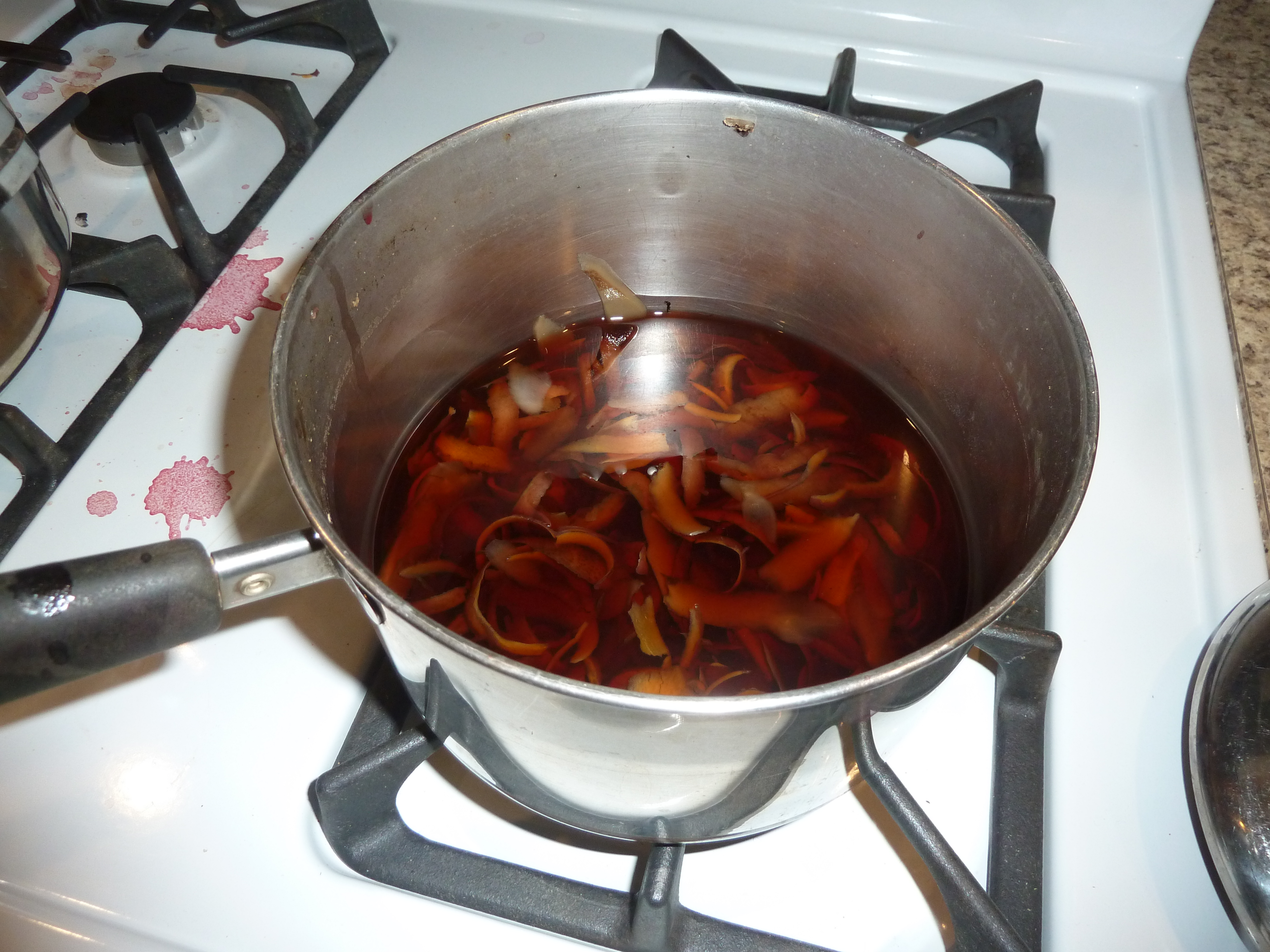
Here’s the broth I made with the beet and sweet potato peels.

P1010849

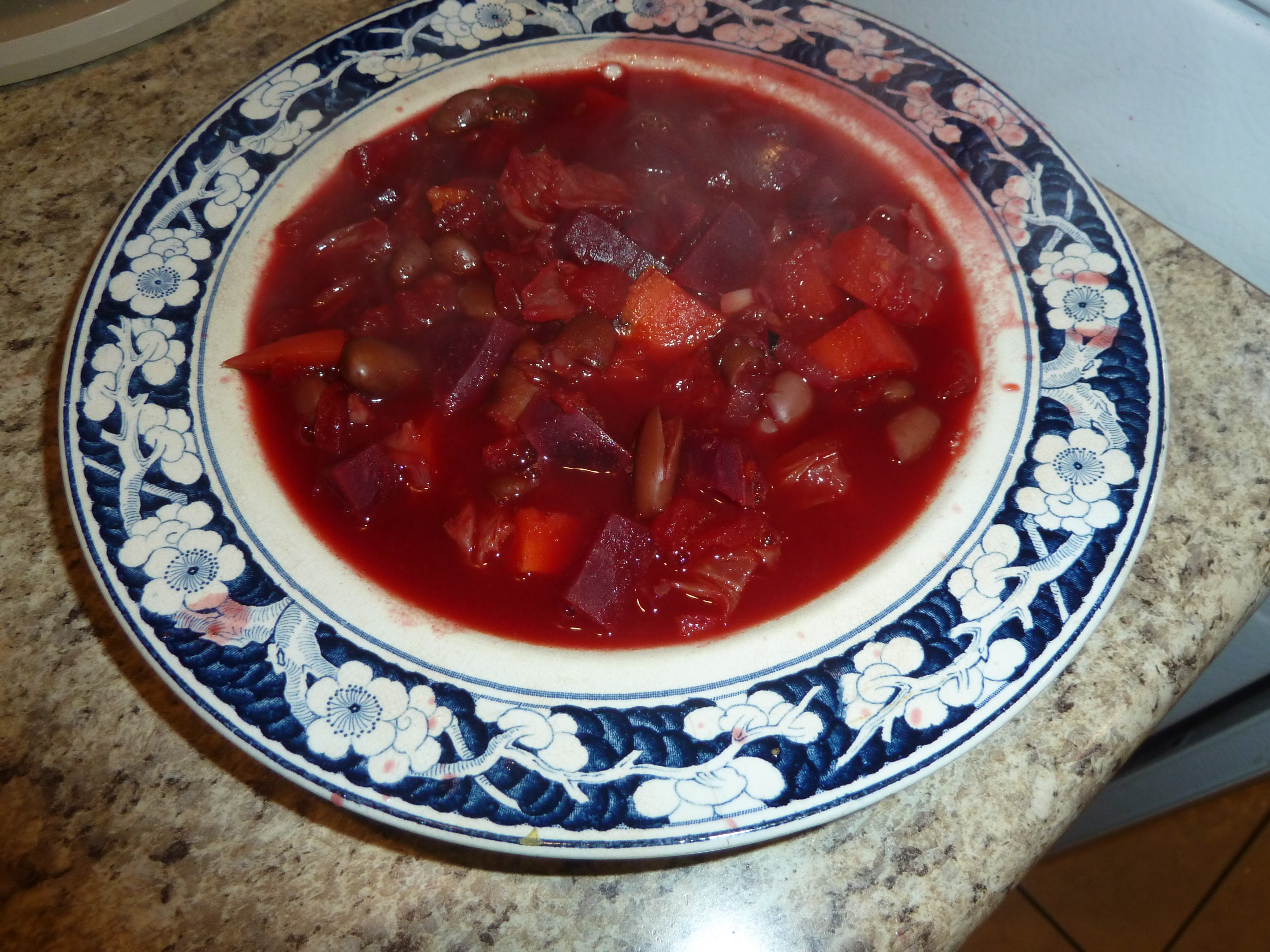
Ready for the table.

The stew came out pretty good although probably bearing little resemblance to anything actually eaten in Ukraine. The combination of sweet potatoes, beets, and fennel lent it a certain vegetable sweetness.

Local Analysis

Local:

onions, cabbage, carrots, beets, sweet potatoes — from the CSA

vegetable broth — homemade from the peels of the beets and sweet potatoes

Nonlocal:

canned tomatoes, kidney beans, salt, fennel seed

I might look into growing fennel next summer.

Posted in food from the garden | Tagged , , | 1 Comment

Roasted Roots

I’m still working my way through that large bag of sweet potatoes from the CSA. The other day I decided to roast them in the oven with other root vegetables. When you roast root vegetables, you can greatly reduce the cooking time by steaming them first for about 5 minutes. Once you have the vegetables in the steamer, you could, of course,  just go ahead and steam them till they’re done and skip the whole roasting in the oven part. Laziness often leads me to do this. But the roasting part is worth doing because the vegetables come out tastier that way, and you can cook them with other vegetables you might not want to steam, such as garlic and onions. To make roasted roots, preheat the oven to 375 and grease a baking pan or cookie sheet. Peel and dice the vegetables. I used sweet potatoes, white potatoes, and beets in my recent batch. Carrots and turnips would also work well.

P1010840

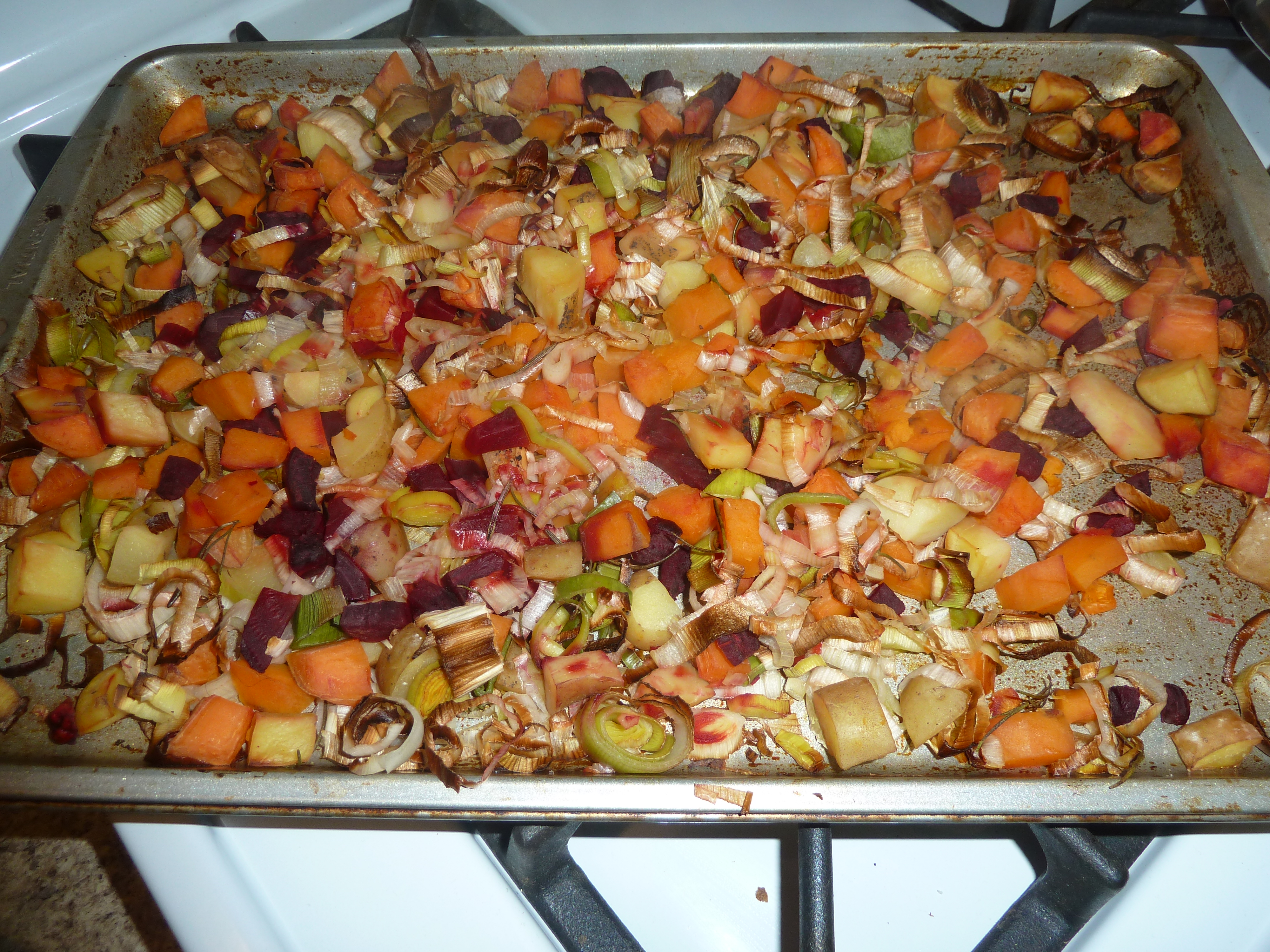
Steam the vegetables for 5 minutes. Meanwhile, chop some garlic cloves and one or two onions or a leek. Combine all the vegetables on the baking sheet and sprinkle with a couple of tablespoons of olive oil, chopped fresh or dried rosemary, and salt to taste. Roast in the oven for about 30 minutes, until vegetables are tender. Stir once halfway through the cooking time.

P1010842

Local Analysis

Local: sweet potatoes, white potatoes, beets, leek, rosemary, garlic – all from the CSA.

Nonlocal: olive oil, salt

Posted in food from the garden | Tagged , , | 2 Comments

Making Gypsy Soup

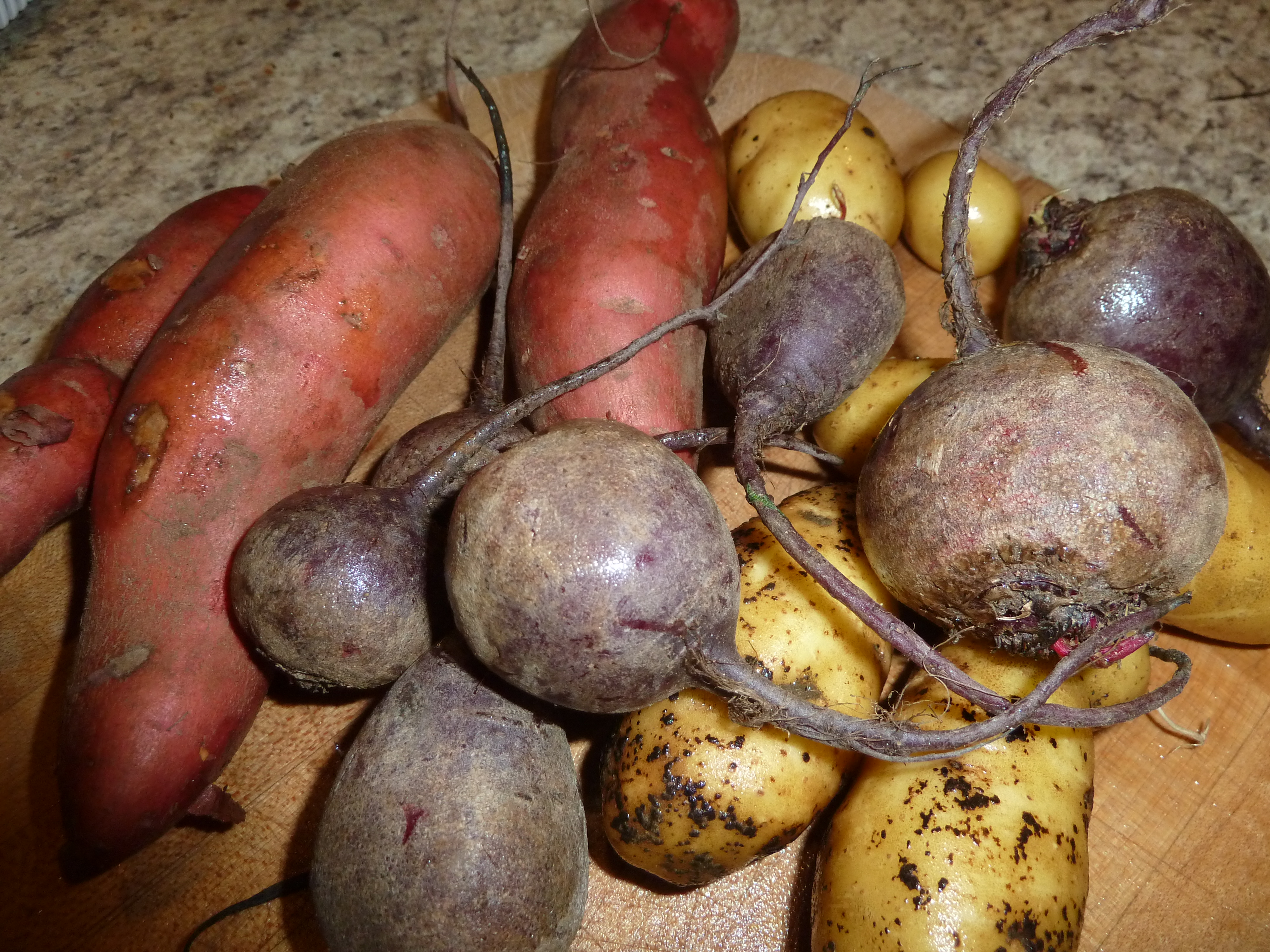
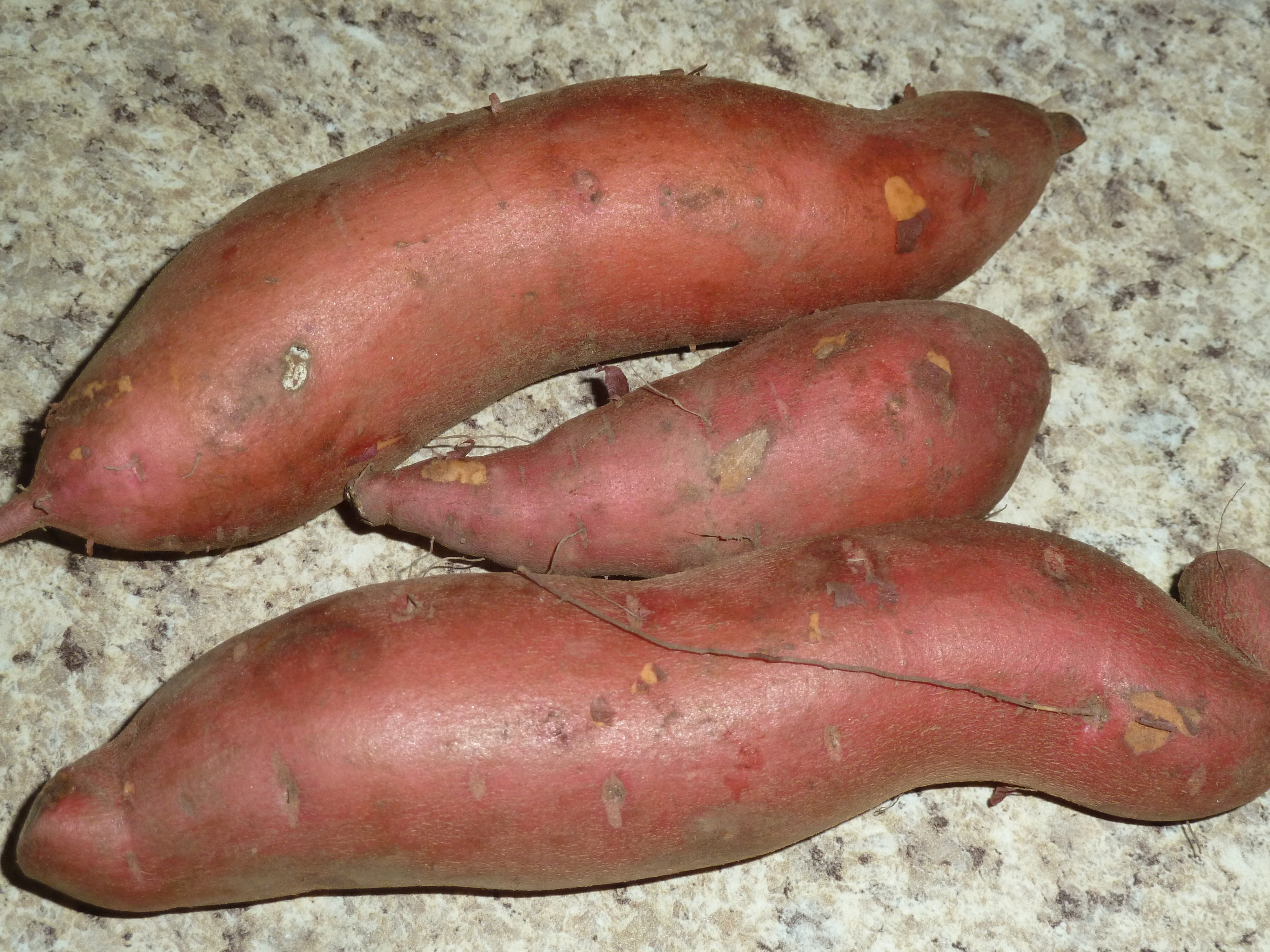
I got a large bag of sweet potatoes from the CSA this week.

P1010837

So I decided to make gypsy soup. You might remember this recipe from the original Moosewood Cookbook by Mollie Katzen. If you happen to have a copy of the book lying around, you can use Mollie’s original recipe. Or you can do as I did and search online. You’ll find a lot of variations to choose from.

Gypsy soup features an orange vegetable (sweet potatoes, squash, or carrots) and chickpeas and is spiced with paprika. It’s both spicy and sweet and makes a warming meal on a cold winter day. I adapted the recipe I chose to exclude ingredients I didn’t have on hand (celery) and include more of what I had abundantly on hand (sweet potatoes and green peppers).

P1010836

Here’s my local analysis of my soup ingredients:

Local:

sweet potatoes –from the CSA

onions–from the CSA

green peppers–from my freezer, originally from the CSA

garlic–from my garden

basil–from my garden

vegetable broth–homemade from vegetable scraps (vegetables originally from the CSA)

Nonlocal:

canned tomatoes–could have been local but, alas, I neglected to can tomatoes last summer

chickpeas

paprika

turmeric

cinnamon

Not bad, except for the tomatoes.

Posted in food from the garden | Tagged , , | 1 Comment

Sprouts

In my quest for ways to have fresh greens to eat during the cold months of the year, I have been experimenting with sprouts. From one point of view, you could say homegrown sprouts are about the most local food you can  have. After all, you can’t get more local than your kitchen counter. On the other hand, I am not sure where the seeds I have sprouted came from originally, but I doubt it was anywhere near here. Still, by making my own sprouts, I have avoided the unsustainable practice of transporting fresh produce over long distances. Seeds are a lot easier to move from place to place.

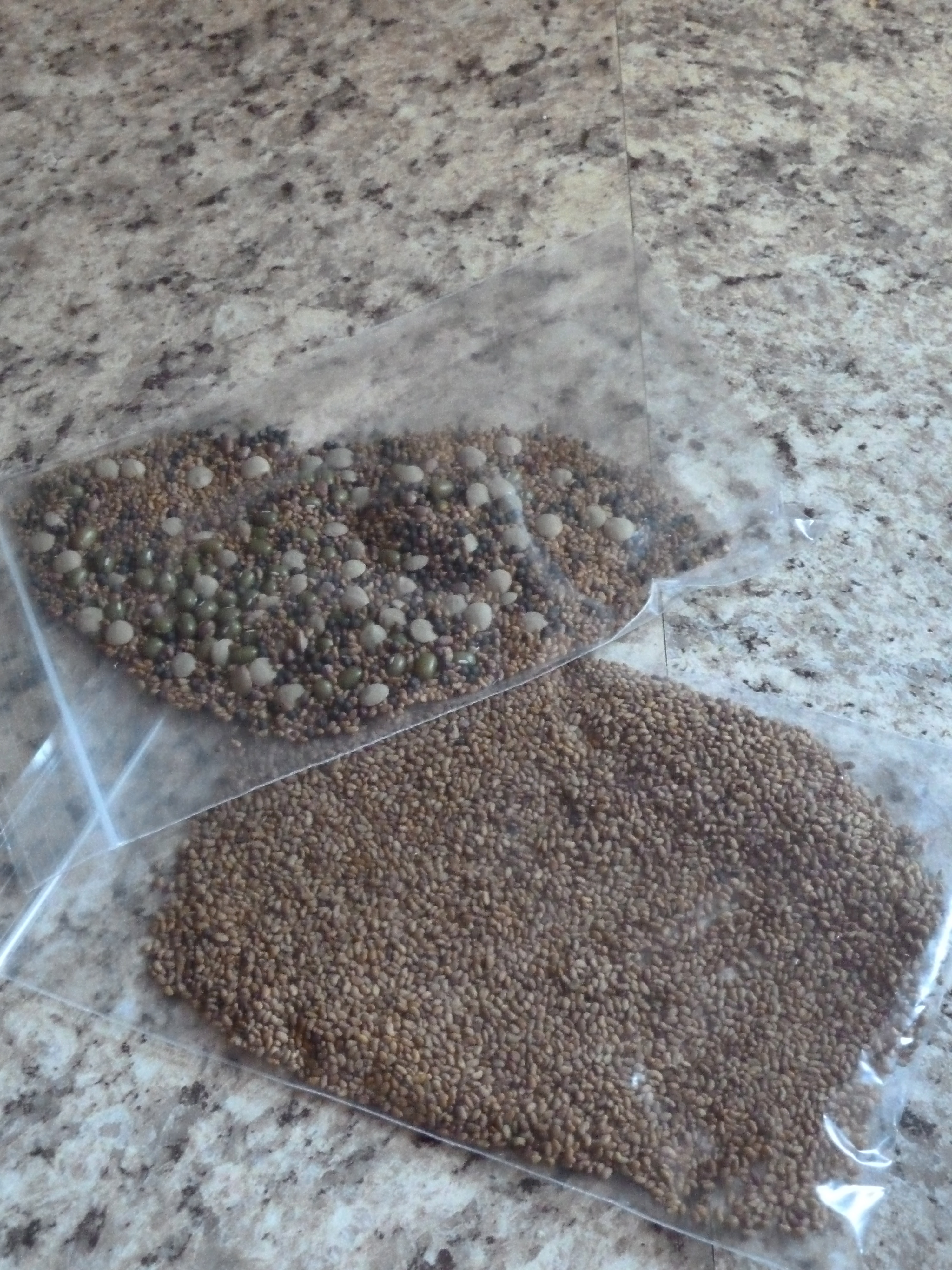
I bought some sprouting seeds from the bulk foods department of my local co-op. I got two kinds: 1) 100% alfalfa seeds and 2) something called “salad mix,” which contains alfalfa, lentils, broccoli, radish, and maybe a few other kinds of seeds.

P1010824

Sprouts need frequent rinsing while they are sprouting, so you need to cover the mouth of your sprouting jar with some sort of mesh or screen. An old stocking is frequently recommended. I don’t happen to have any of those lying around at the moment but, as luck would have it, the week I was starting my sprout experiment I just happened to find an unopened package of knee-highs at a thrift store. (btw, I highly recommend thrift store shopping. I can find almost everything I need there.)

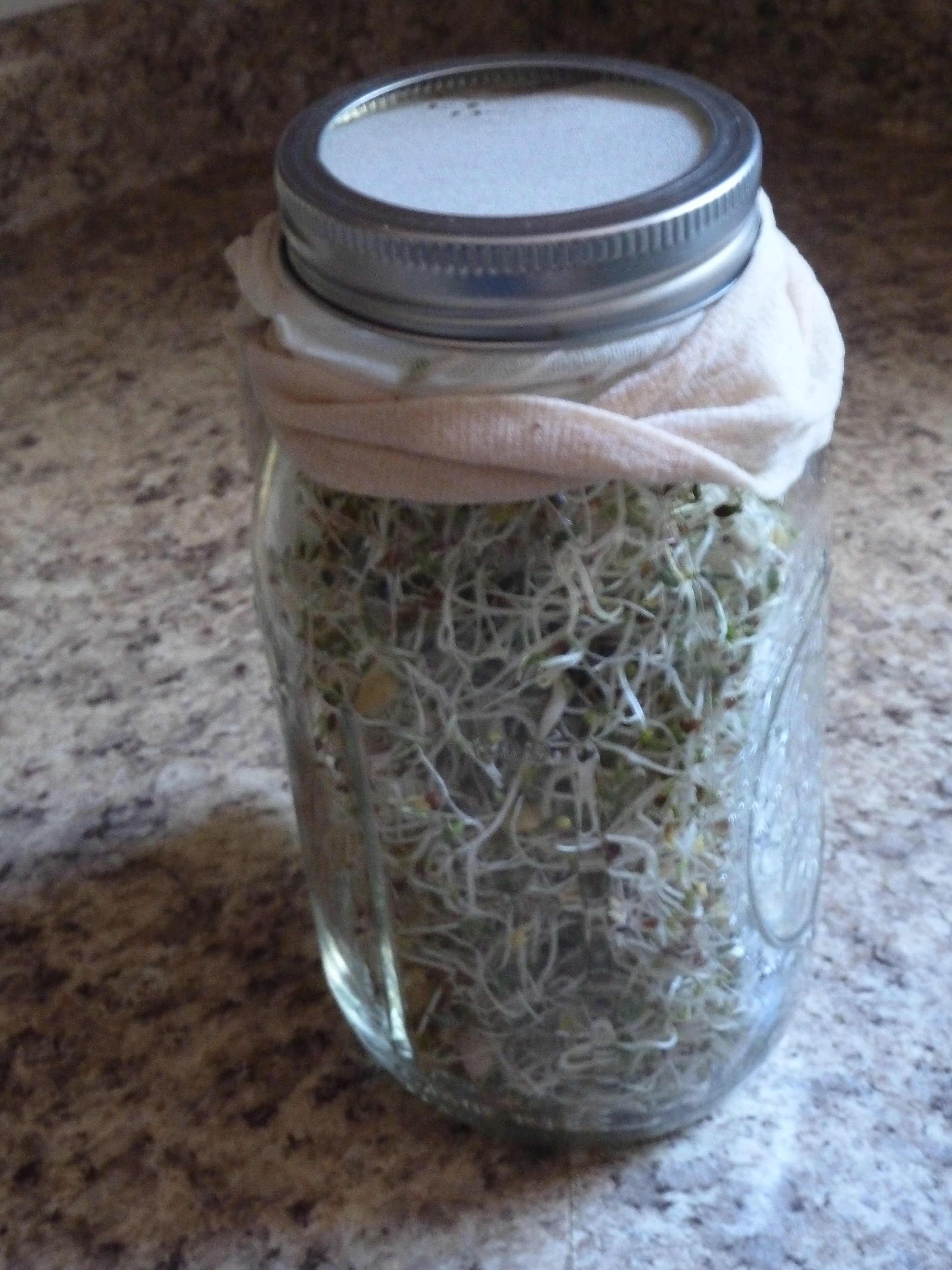
I use a quart-sized mason jar as my sprouting jar, stretch a piece of  a knee-high over the mouth, and hold it down with the jar’s metal screw band. I’m sure a rubber band would work just as well. Two tablespoons of seeds seems to be the right amount for a quart jar. Soak the seeds over night. The next morning, pour out the water, rinse the seeds with fresh water, then let them sit on the counter. Rinse them morning and night for 4-5 days, until the sprouts fill the jar.

P1010823

It’s a good idea to let the sprouts sit in sunlight during the last day or so so they can start turning green. When your jar is filled with green sprouts, refrigerate and enjoy. I mostly eat them in sandwiches with homemade hummus, or in salads. They’re great in omelets, too.

Posted in Uncategorized | Tagged , | 1 Comment

Bread Pudding +

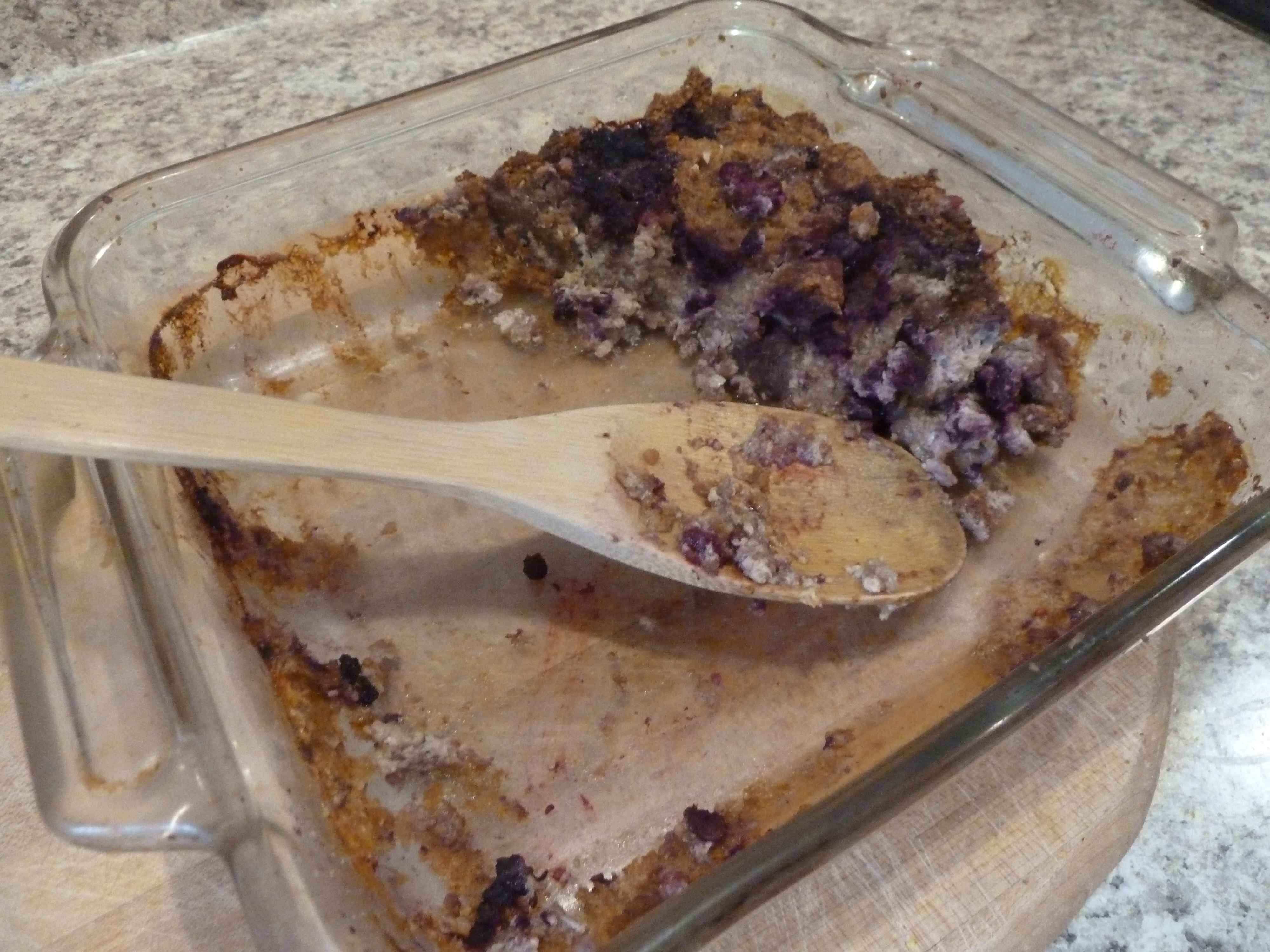
I love anything custard-y, so bread pudding is high on my list of things to make. It’s a really versatile dish that can be made sweet or savory and varied with all sorts of additions, so it can easily be modified to incorporate whatever local fruits or vegetables are in season or in your freezer. I save the heel ends of loaves and odd pieces of stale bread (always whole grain, of course) in a plastic bag in the freezer. Then when the bag is full, I make my bread pudding. This week I made one with wild black raspberries that I picked and froze last summer.

P1010818

Here’s the basic recipe for a sweet bread pudding with fruit.

Place 4 cups of cubed bread into a greased 9×9 baking dish. Mix in 1 cup of berries or chopped fruit.

Beat together 2 cups of milk, two eggs, 6 tablespoons brown sugar, 1/2 teaspoon cinnamon, and 1/2 teaspoon vanilla extract. Pour over the bread and fruit. Bake at 350 for about 45 minutes.

P1010817

It’s so tasty, it doesn’t last long!

Here’s my analysis of how local my raspberry bread pudding was:

Bread – mostly from a bakery in Maine, not too far away, but likely most of the ingredients that went into the bread were not from anywhere in New England.

Berries – from my backyard

Milk and eggs – from local farms

Sugar, cinnamon, vanilla – from far away tropical places. I could have substituted local honey or maple syrup for the sugar.

Posted in fruits, recipes | Tagged , , | 1 Comment

Zucchini Bread

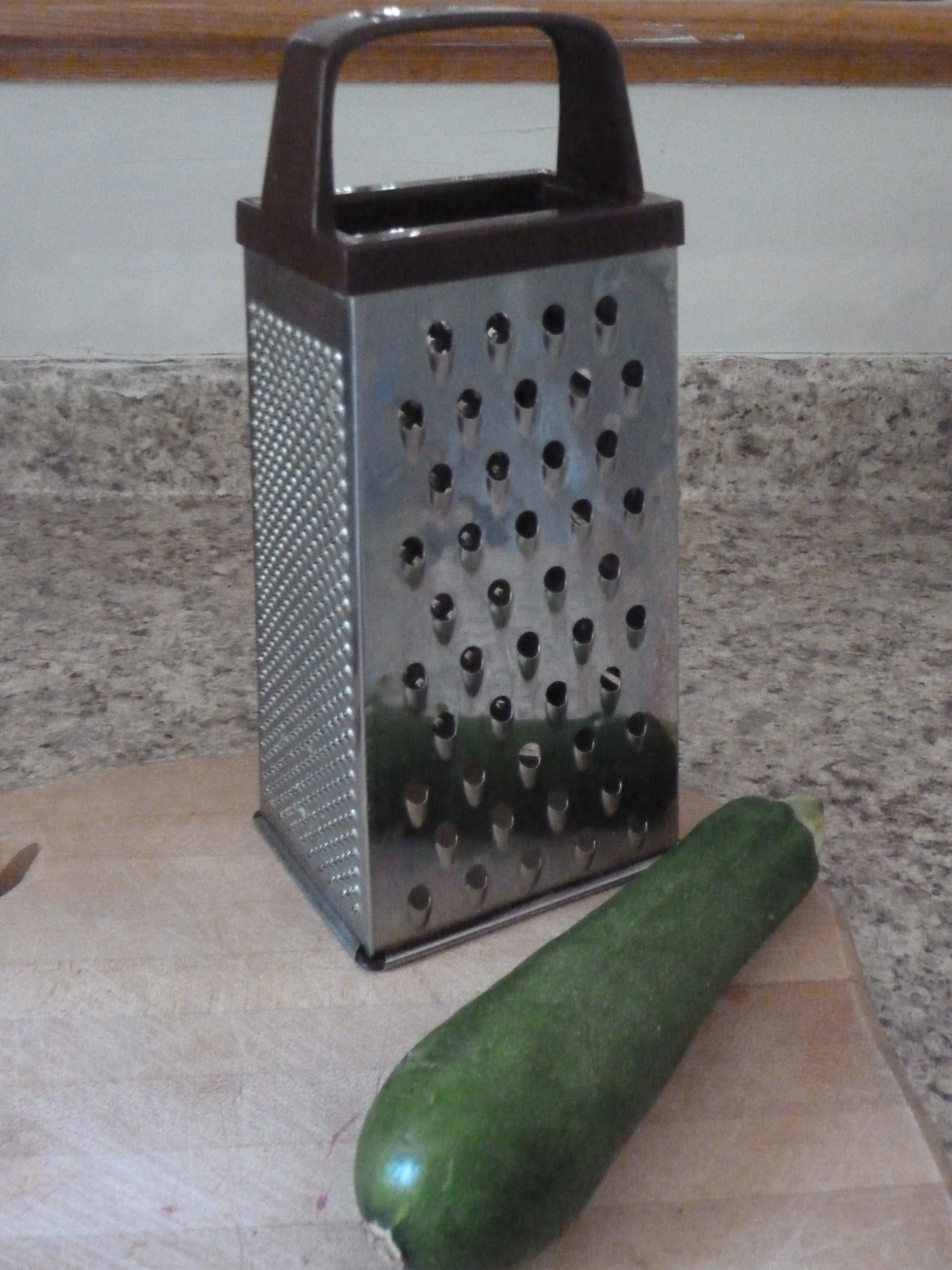
Autumn has come and with it the end of what-am-I-going-to-do-with-all-this-zucchini season. Earlier this week I used my one last, lone zucchini to make one of my favorite treats – zucchini bread. This quick bread freezes well so it is a way, though not a particularly space efficient one, to store the excesses of a zucchini harvest. I slice it before putting it in the freezer, then I can easily remove just the amount I want each time.

P1010804

I adapted this recipe from an old pumpkin bread recipe. You can easily change it back to pumpkin bread by substituting pureed pumpkin or winter squash for the zucchini.

Zucchini Bread

Combine:

  • 1 c whole wheat flour
  • 3/4 c all-purpose flour
  • 1/4 t baking powder
  • 1 t baking soda
  • 1/2 t salt
  • 1/2 cinnamon
  • 1/4 t cloves

Beat until light and fluffy:

  • 3/4 c brown sugar
  • 1/4 c butter
  • 2 eggs

Stir in:

  • 1/3 c milk
  • 1/2 t vanilla extract
  • 1 c grated zucchini

Fold the wet ingredients into the dry, then fold in 1/2 c chopped walnuts and 1/2 c raisins.

Bake in a greased loaf pan at 350 for about one hour.

P1010806

Posted in food from the garden, recipes | Tagged , , | 2 Comments

Elderberry Muffins

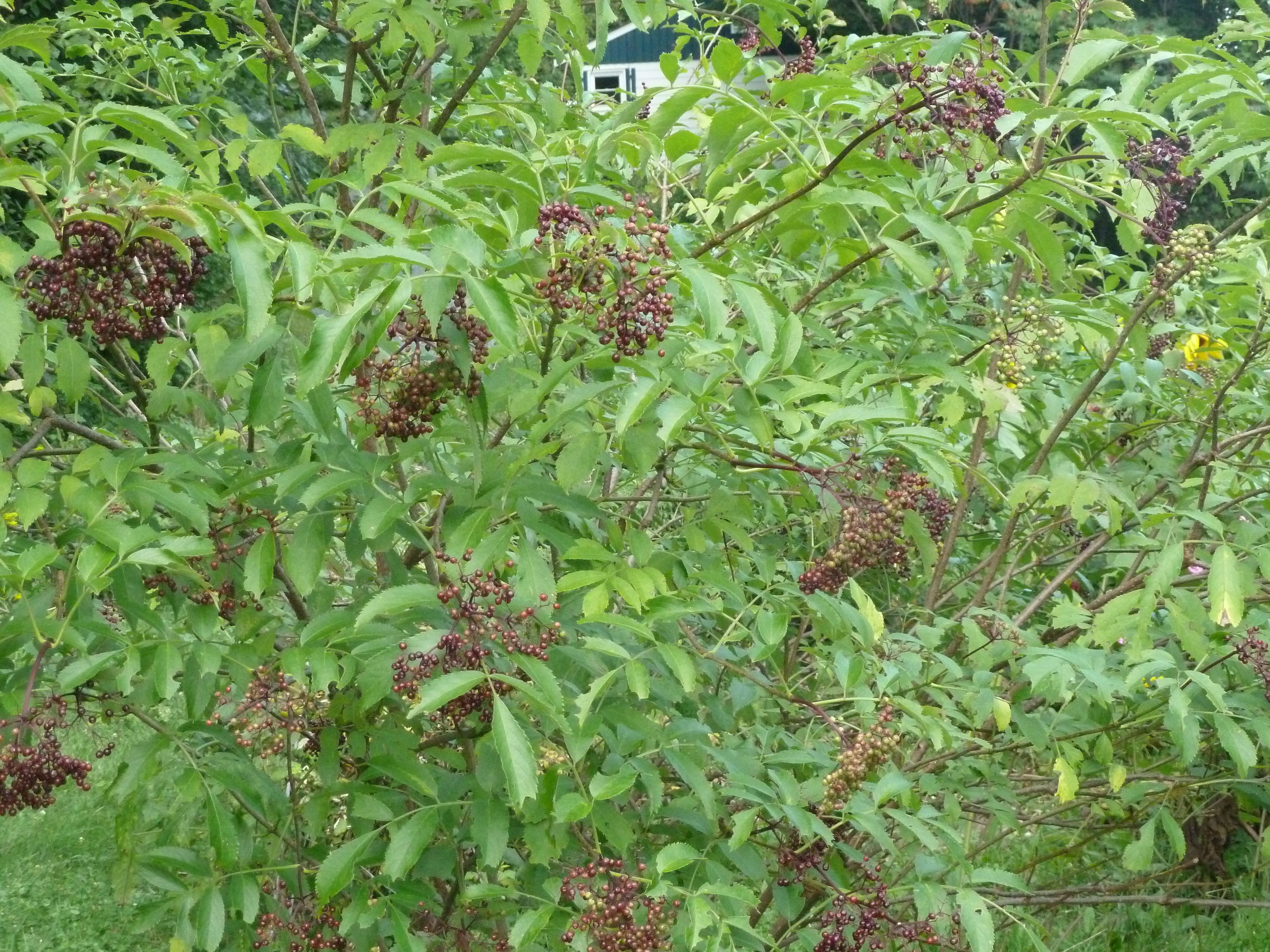
Another thing I am going to miss when my house sells is the elderberry bushes. There was a great crop this year. Here they are, just beginning to ripen.

P1010736

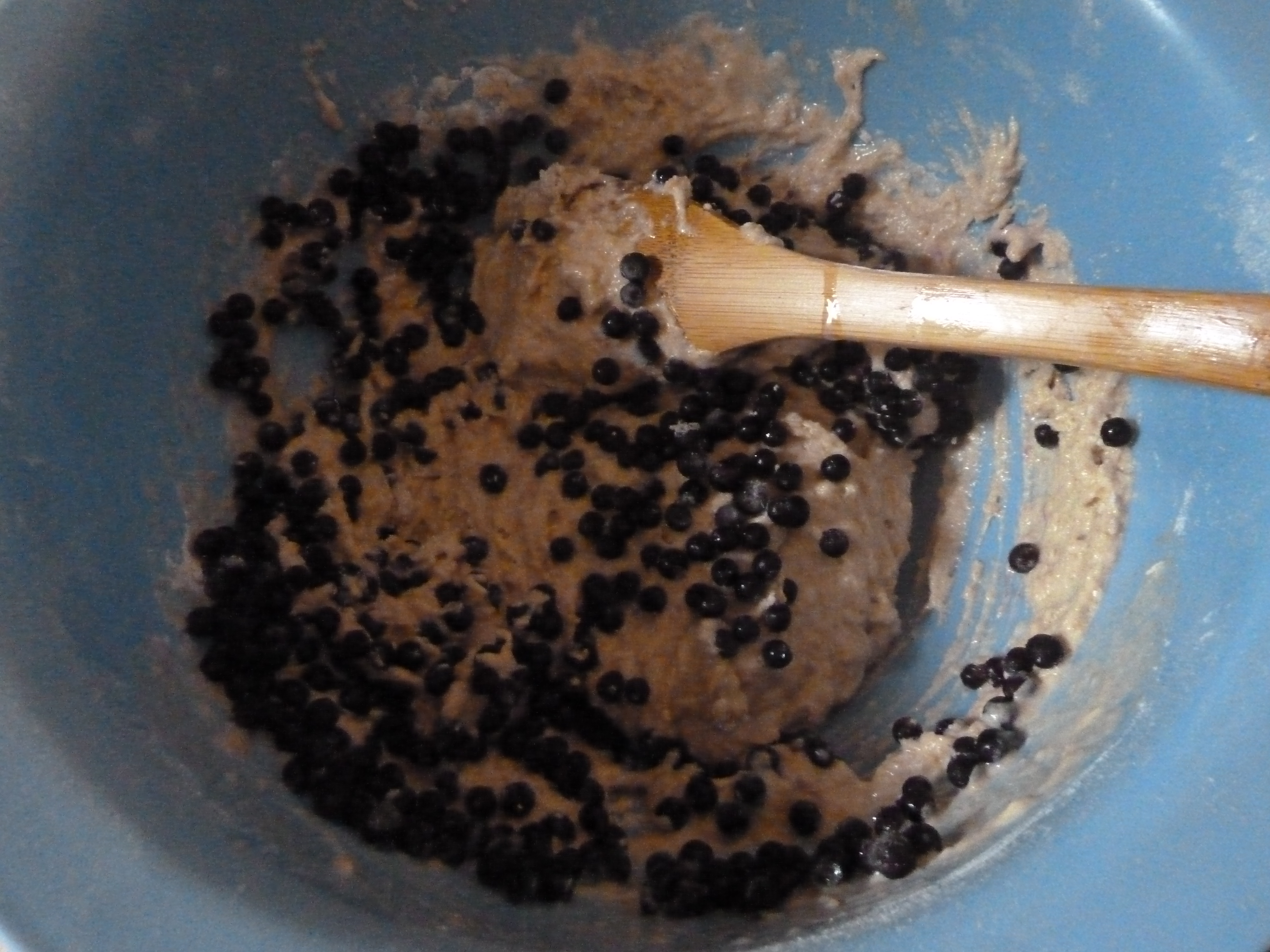
Even though they were turning ripe right around the time that I was busy moving to my new house, I managed to pick and freeze a few pints. So far, I’ve been enjoying them in muffins. If you want to try this delicious treat, you can use your favorite muffin recipe and just add 1 cup of elderberries at the end. Or, you can try the recipe I use.

Mix together:

1 cup whole wheat flour

1 cup all purpose flour

1 tbsp. baking powder

1/2 tsp. salt

In a separate bowl combine:

1 beaten egg

1 cup milk

1/4 cup melted butter

1/4 cup maple syrup

Stir the wet ingredients into the dry, then stir in 1 cup elderberries, frozen or fresh.

P1010792

Bake at 425 degrees for 15-20 minutes. Best eaten fresh out of the oven with butter and/or jam.

P1010793

Posted in fruits, recipes | Tagged , , | 3 Comments